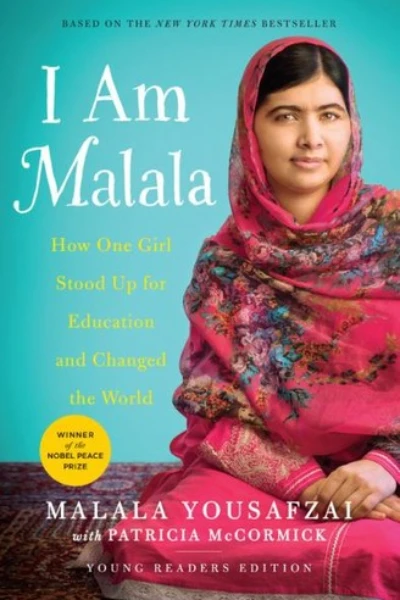
I Am Malala
I Am Malala — Chapter no 4
4
The Village
IN OUR TRADITION on the seventh day of a child’s life we have a celebration called Woma (which means ‘seventh’) for family, friends and neighbours to come and admire the newborn. My parents had not held one for me because they could not afford the goat and rice needed to feed the guests, and my grandfather would not help them out because I was not a boy. When my brothers came along and Baba wanted to pay, my father refused as he hadn’t done this for me. But Baba was the only grandfather I had as my mother’s father had died before I was born and we became close. My parents say I have qualities of both grandfathers – humorous and wise like my mother’s father and vocal like my father’s father! Baba had grown soft and white-bearded in his old age and I loved going to visit him in the village.
Whenever he saw me he would greet me with a song as he was still concerned about the sad meaning of my name and wanted to lend some happiness to it: ‘Malala Maiwand wala da. Pa tool jehan ke da khushala da,’ he sang. ‘Malala is of Maiwand and she’s the happiest person in the whole world.’ We always went to the village for the Eid holidays. We would dress in our finest clothes and pile into the Flying Coach, a minibus with brightly painted panels and jangling chains, and drive north to Barkana, our family village in Shangla. Eid happens twice a year – Eid ul-Fitr or ‘Small Eid’ marks the end of the Ramadan fasting month, and Eid ul-Azha or ‘Big Eid’ commemorates the Prophet Abraham’s readiness to sacrifice his son Ismail to God. The dates of the feasts are announced by a special panel of clerics who watch for the appearance of the crescent moon. As soon as we heard the broadcast on the radio, we set off.